
Blogi
How to Calculate the Right Heat Pump Capacity (kW Guide)
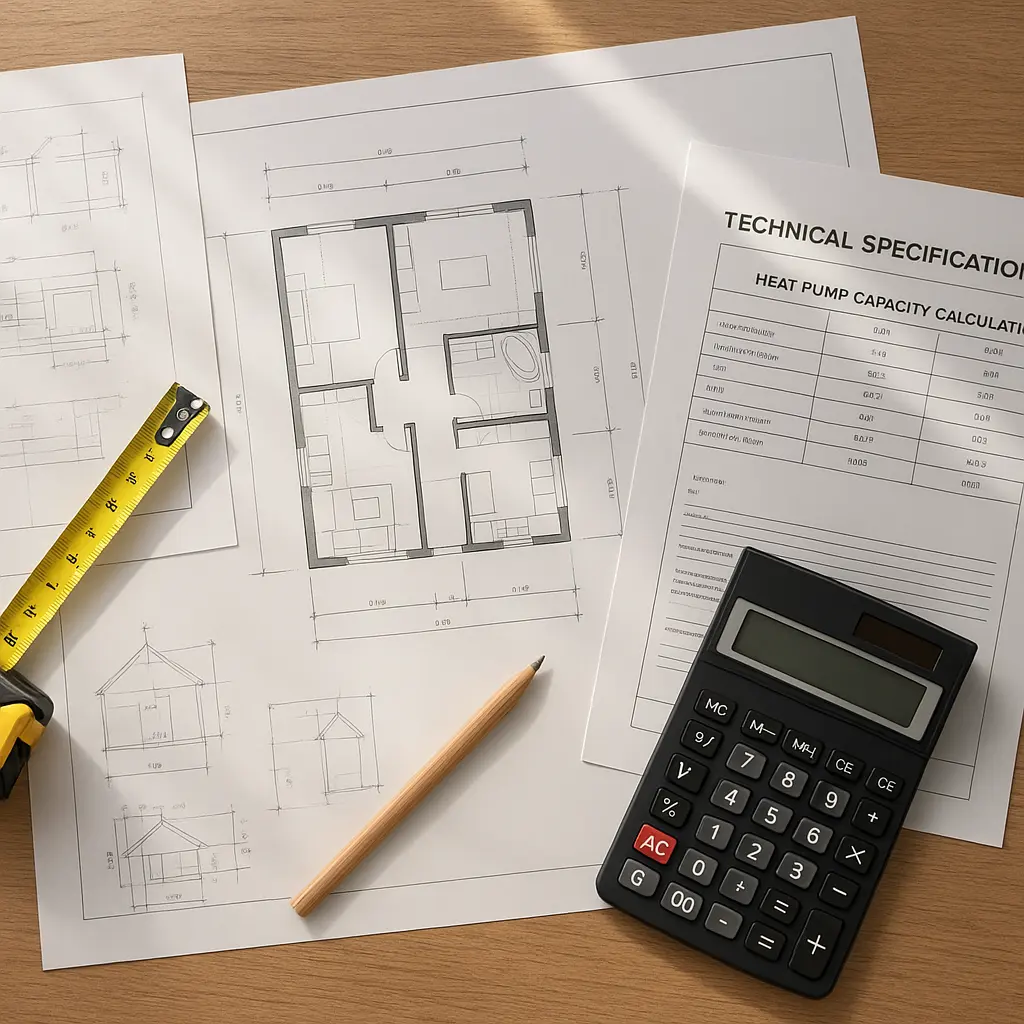
Most homeowners in Estonia make a costly mistake when selecting a heat pump: they either oversize the unit, wasting thousands of euros on unnecessary capacity, or undersize it, leading to inadequate heating during cold winters. The difference between a properly sized 8 kW unit and an incorrectly chosen 12 kW system can cost you €1,500 upfront plus hundreds in annual running costs. Understanding heat pump sizing is not optional if you want efficient, cost-effective climate control. In practice, the right calculation involves your property’s insulation quality, ceiling height, local climate, and intended usage, not just square meters.
Table of Contents
- Quick Takeaways
- Fundamentals of Heat Pump Capacity
- The Standard Calculation Method
- Critical Factors Beyond Square Meters
- Heating Area Requirements by Property Type
- kW Heat Pump Selection: Practical Examples
- Common Sizing Mistakes
- Frequently Asked Questions
- References
Quick Takeaways
| Key Insight | Explanation |
|---|---|
| Base calculation uses 0.1 kW per m² | For well-insulated properties, multiply heated area by 0.1 kW to get minimum capacity; poorly insulated properties need 0.15 kW per m² |
| Climate zone matters significantly | Estonian winters regularly hit -20°C, requiring 20-30% more capacity than mild European regions for the same property size |
| Ceiling height adjusts the formula | Standard calculations assume 2.5m ceilings; add 10% capacity for every 0.5m above this baseline |
| Oversizing reduces efficiency | Units sized 20% above actual need cycle on/off frequently, reducing lifespan and increasing electricity costs by 15-25% |
| Insulation quality is the multiplier | A 150m² home can require anywhere from 10 kW to 18 kW depending solely on wall, roof, and window insulation standards |
| DHW requirements add 2-3 kW | If using an air-water heat pump for domestic hot water, add this fixed amount to your space heating calculation |
| Professional heat loss calculations win | EN 12831 standard calculations account for 15+ variables and typically differ from simple formulas by 15-35% |
Fundamentals of Heat Pump Capacity
Heat pump capacity, measured in kilowatts (kW), represents the rate at which the unit can transfer heat energy into or out of your property. A 10 kW air-source heat pump delivers 10 kilowatts of heating power per hour under specific outdoor temperature conditions. The data consistently shows that most residential properties in Estonia require between 6 kW and 16 kW for adequate space heating.
The challenge is that heat pump output varies with outdoor temperature. A unit rated at 12 kW at +7°C might only deliver 8 kW when the outdoor temperature drops to -15°C. This performance degradation directly impacts heat pump capacity calculation accuracy. You must select capacity based on your coldest expected outdoor temperature, not mild conditions.
The relationship between property size and required capacity is not linear. A 200m² home does not necessarily need exactly double the capacity of a 100m² home if the larger property has superior insulation, lower ceilings, or fewer external walls. This is why simplistic online calculators that only ask for square meters routinely produce incorrect recommendations.
The Standard Calculation Method
The basic formula for heating area requirements starts with multiplying your heated floor area by a capacity factor. For modern, well-insulated Estonian properties built after 2010, use 0.08 to 0.1 kW per square meter. For properties built between 1990 and 2010 with average insulation, use 0.1 to 0.12 kW per m². For older properties or those with poor insulation, the factor increases to 0.12 to 0.15 kW per m².
Here is the step-by-step process: First, measure your total heated floor area in square meters, excluding unheated spaces like garages or cold storage. Second, assess your insulation quality honestly. Third, multiply area by the appropriate capacity factor. Fourth, add 10% if you have ceilings above 2.7m. Fifth, add 2-3 kW if you plan to heat domestic hot water with the same system. Sixth, verify the result against your local minimum outdoor design temperature.
Pro tip: Always check the heat pump’s capacity rating at your location’s minimum winter temperature, not the manufacturer’s standard test conditions of +7°C outdoor. A unit advertised as 12 kW might only deliver 9 kW at -20°C, which is the figure that matters in Estonian winters.
Design Temperature Considerations
Estonia’s design temperature for heating calculations ranges from -21°C in coastal areas to -26°C in inland regions. This is the temperature that occurs roughly 1% of winter hours. Your heat pump must meet your property’s full heating demand at this temperature to maintain comfort without supplementary heating.
In practice, many installers use -20°C as a reasonable compromise for most Estonian locations. At this outdoor temperature, a properly sized system should maintain +21°C indoors without running continuously at maximum capacity. Running constantly at 100% capacity during extreme cold reduces efficiency and prevents the defrost cycle from working properly.
Critical Factors Beyond Square Meters
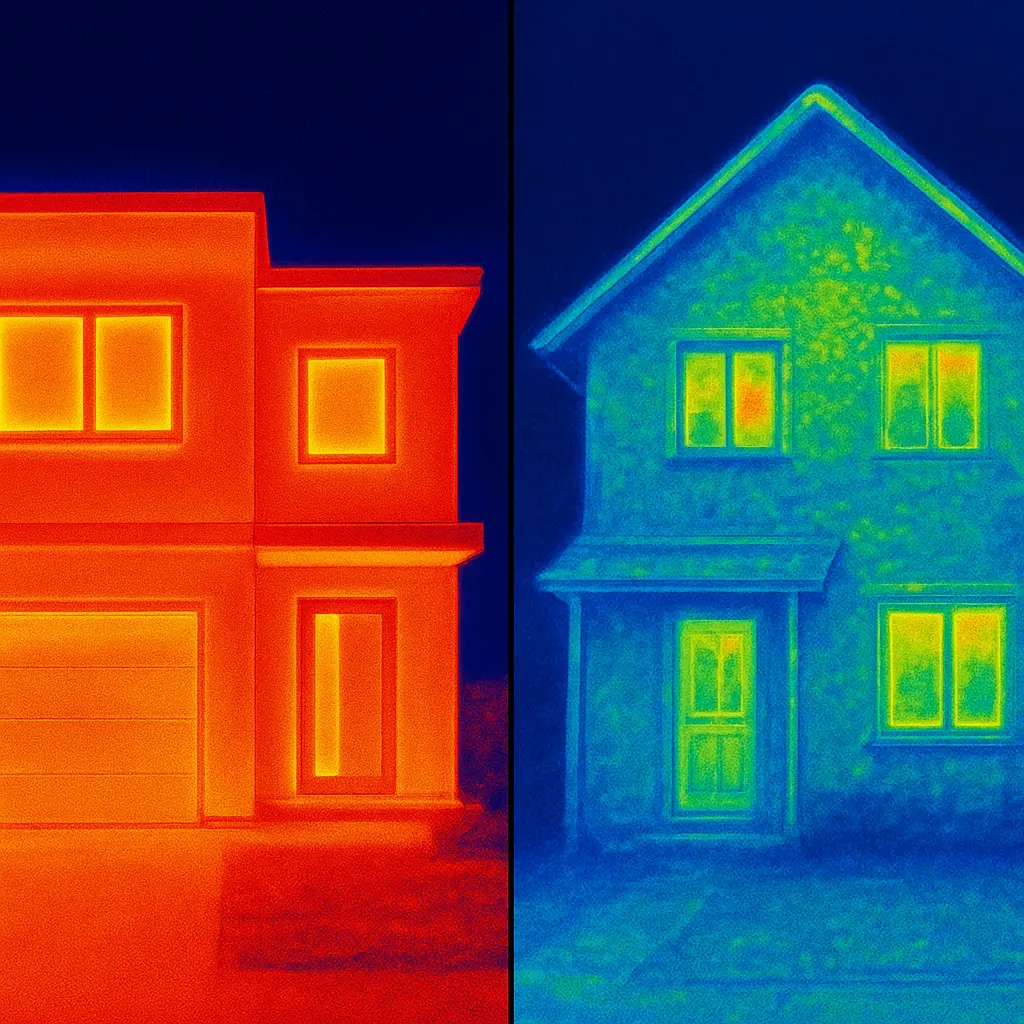
Insulation quality dominates the capacity equation. A 150m² detached house built in 1985 with single-pane windows, uninsulated walls, and 10cm of roof insulation might need 18 kW. The same size property built to 2020 standards with triple-glazed windows, 20cm wall insulation, and 30cm roof insulation requires only 10 kW. That 8 kW difference represents a €2,000 to €3,000 price differential in equipment costs.
Window area and orientation affect heat loss substantially. Large south-facing windows provide passive solar gain during sunny winter days, effectively reducing required capacity by 5-10%. Conversely, excessive north-facing glazing increases heat loss. Calculate total window area and add 5% to required capacity if windows exceed 20% of wall area.
The number of external walls matters. A mid-terrace property with two external walls loses less heat than a detached property with four external walls and an exposed roof. Corner apartments similarly lose more heat than interior units. Add 10-15% to calculated capacity for fully detached properties compared to attached or semi-detached equivalents of the same floor area.
Ventilation and Air Tightness
Modern mechanical ventilation with heat recovery (MVHR) systems reduce heating demand by 20-30% compared to natural ventilation through gaps and vents. If your property has MVHR, reduce the calculated capacity by 15%. If you have older, leaky construction with no controlled ventilation, increase capacity by 10%.
Air tightness testing measures how many air changes per hour occur at 50 Pascals pressure (ACH50). Properties with ACH50 below 1.0 are very tight and need minimal additional capacity. Properties above ACH50 of 5.0 lose significant heat through infiltration and require 15-20% extra capacity beyond the basic calculation.
Heating Area Requirements by Property Type
Apartment buildings typically need 0.06 to 0.08 kW per m² because most units have only one or two external walls, with neighbors’ apartments providing buffer zones. A 75m² apartment in a modern building usually requires a 5-6 kW heat pump, while the same area in a detached house might need 8-9 kW.
Semi-detached and row houses fall between apartments and fully detached properties. Use 0.08 to 0.1 kW per m² for well-insulated examples. A typical 120m² row house with shared walls on both sides needs approximately 10-12 kW, assuming modern construction standards and 2.5m ceilings.
Detached houses require the most capacity per square meter due to maximum exposure to outdoor conditions. Use 0.1 to 0.12 kW per m² as the starting point. A 180m² detached property built to current standards typically needs 14-16 kW, while an older equivalent might require 18-21 kW.
| Property Type | Capacity Factor (kW/m²) | Example: 150m² Property |
|---|---|---|
| Modern apartment (post-2015) | 0.06 – 0.08 | 9 – 12 kW |
| Well-insulated row house | 0.08 – 0.10 | 12 – 15 kW |
| Modern detached house | 0.10 – 0.12 | 15 – 18 kW |
| Older detached (pre-2000) | 0.12 – 0.15 | 18 – 22 kW |
Commercial Property Differences
Commercial spaces often have higher ceilings, larger window areas, and greater ventilation requirements than residential properties. Office buildings typically need 0.08 to 0.12 kW per m², while retail spaces with frequent door openings require 0.12 to 0.15 kW per m². Warehouses and workshops with minimal insulation and high ceilings can demand 0.15 to 0.20 kW per m².
Commercial calculations must also account for occupancy density and equipment heat gain. A server room generates substantial heat, reducing or eliminating heating requirements. A physiotherapy clinic with hot tubs and pools needs significant additional capacity for water heating. These factors require detailed assessment beyond simple area calculations.
kW Heat Pump Selection: Practical Examples
Consider a 100m² apartment in Tallinn built in 2018 with good insulation, 2.5m ceilings, and two external walls. Calculation: 100m² × 0.07 kW/m² = 7 kW base requirement. No additions needed for ceiling height or extreme exposure. Result: a 7-8 kW air-source heat pump is appropriate. At KliimaPood24.ee, this typically corresponds to models in the lower-midrange capacity bracket.
Now take a 160m² detached house built in 1995 with upgraded but not perfect insulation, 2.7m ceilings, and plans to heat domestic hot water. Calculation: 160m² × 0.12 kW/m² = 19.2 kW base requirement. Add 2.5 kW for DHW. Add 5% (0.96 kW) for ceiling height. Total: 22.7 kW required. Round up to a 24 kW air-water heat pump system. This size ensures adequate performance at design temperature without oversizing.
Pro tip: When choosing between two adjacent capacity sizes (for example, 12 kW vs 14 kW), select the smaller unit if your calculation falls within 10% of its rating and your property has good insulation. Choose the larger unit if you have older construction, plan future extensions, or live in an area prone to extended cold periods below -22°C.
Real Installation Cases
A 2023 installation in Tartu involved a 135m² row house from 2016. Initial online calculator suggested 10 kW. Detailed assessment revealed 3m ceilings in the living area, one large uninsulated garage door in the heated space, and plans for a 300L hot water tank. Correct sizing: 135m² × 0.09 kW/m² = 12.15 kW, plus 10% for ceiling height (1.22 kW), plus 2.5 kW for DHW = 15.87 kW. A 16 kW unit was installed and performs optimally.
Another case involved a 220m² detached house from 1987 in Pärnu with renovated insulation to 2010 standards. Owner initially wanted 18 kW based on area alone. Heat loss calculation revealed actual requirement of 24 kW due to large window area (35% of wall surface), exposed location near the coast, and incomplete roof insulation. The 18 kW unit would have run continuously in cold weather and struggled to maintain temperature.
Common Sizing Mistakes
The most frequent error is ignoring local climate when using international sizing calculators. A German or UK calculator using 0.06 kW/m² might work in those milder climates but leaves Estonian properties under-heated. Always add 20-30% to recommendations from calculators designed for Western European climates.
Another common mistake is oversizing for “safety margin.” Some installers recommend adding 30-50% extra capacity “just in case,” resulting in units that cycle on and off constantly in mild weather, never running long enough to reach optimal efficiency. This reduces the coefficient of performance (COP) by 15-25% and shortens compressor lifespan. A properly sized unit should run for 10-15 minute cycles in moderate weather, not 3-5 minute bursts.
Failing to account for planned renovations causes problems. If you calculate capacity for a poorly insulated property but plan to upgrade windows and add wall insulation within two years, you will end up with an oversized system. Either complete renovations before installing the heat pump, or calculate capacity based on post-renovation performance.
Contractor Quality Issues
Some contractors use quick rule-of-thumb calculations to speed up quotations, assuming all properties of similar size need identical capacity. This approach ignores critical variables and leads to frequent sizing errors. A competent installer should spend 30-45 minutes assessing your property, measuring rooms, checking insulation, and asking detailed questions about usage patterns.
Beware of installers who recommend the same capacity they installed in their last three jobs. Different properties have vastly different requirements. If the contractor suggests a size without detailed questions about your insulation, windows, ceiling heights, and local climate exposure, seek a second opinion. Proper kW heat pump selection requires individualized calculation, not template recommendations.
According to heat pump engineering standards documented by technical institutes across Northern Europe, undersizing by more than 10% results in supplementary heating costs exceeding 30% of total heating expenses during average winters, while oversizing by more than 20% reduces seasonal COP by 12-18%.
Frequently Asked Questions
What size heat pump do I need for a 100 square meter house?
For a well-insulated 100m² house in Estonia, you need 8-10 kW for space heating alone. Add 2-3 kW if heating domestic hot water with the same unit. Older properties with poor insulation may require 12-15 kW. The exact requirement depends on ceiling height, window quality, number of external walls, and local minimum winter temperature.
How do I know if my heat pump is oversized?
An oversized heat pump cycles on and off frequently in mild weather, running for 3-5 minutes then shutting down for 10-15 minutes. This short cycling prevents the system from reaching optimal operating temperature and reduces efficiency. Your electricity bills will be higher than expected, and indoor temperature may fluctuate by 2-3 degrees. Properly sized units run for 12-20 minute cycles in moderate conditions.
Can I add capacity later if my heat pump is too small?
No, you cannot upgrade an undersized heat pump without replacing the entire outdoor unit. Some systems allow adding a second outdoor unit in a cascade configuration, but this costs nearly as much as correct initial sizing. If uncertain between two sizes, choose the larger option, as moderate oversizing (10-15%) causes fewer problems than any amount of undersizing.
Should I account for future room additions in capacity calculation?
Only include planned additions that will be completed within one year of installation. For future expansions beyond one year, size the system for current needs and plan to upgrade when expanding. Heat pumps have 15-20 year lifespans, so sizing for renovations 5-10 years away means operating an oversized, inefficient system for extended periods. Install modular systems if major expansions are likely.
Do heat pumps lose capacity over time?
Quality heat pumps maintain 95-97% of original capacity for the first 10 years with proper maintenance. After 15 years, capacity typically decreases to 90-92% of original rating. This minimal degradation does not require compensation in initial sizing. However, dirty filters, low refrigerant levels, or compressor wear can reduce capacity by 20-30%, which is why annual maintenance is essential.
How does altitude affect heat pump sizing?
Air density decreases approximately 12% per 1000m elevation, reducing heat pump capacity by 5-8% at the same temperature. Estonian properties rarely exceed 300m elevation, resulting in negligible impact. For the few properties above 200m, add 3-5% to calculated capacity. Mountain regions also experience lower minimum temperatures, which has greater impact than altitude itself.
What happens if my calculation shows I need 13.5 kW but only 12 kW and 16 kW models exist?
Choose the 16 kW model. The 12 kW unit would be undersized by 11%, causing inadequate heating during cold periods and constant maximum-capacity operation. The 16 kW model represents 15% oversizing, which is acceptable and preferable to undersizing. Inverter-driven heat pumps modulate capacity down to 30-40% of maximum, so the 16 kW unit can efficiently handle moderate heating loads by running longer at reduced output.
What has been your experience with heat pump sizing for your property, and did the installed capacity match your expectations during the coldest winter months?
References
- U.S. Department of Energy guidelines on heat pump efficiency and sizing standards
- ASHRAE technical resources for HVAC system design and heat load calculations
- Statista data on European heat pump installation trends and capacity distributions
- Building Science Corporation research on thermal performance and insulation impact