Blogi
12 Air Conditioning Replacement Signs You Can’t Ignore
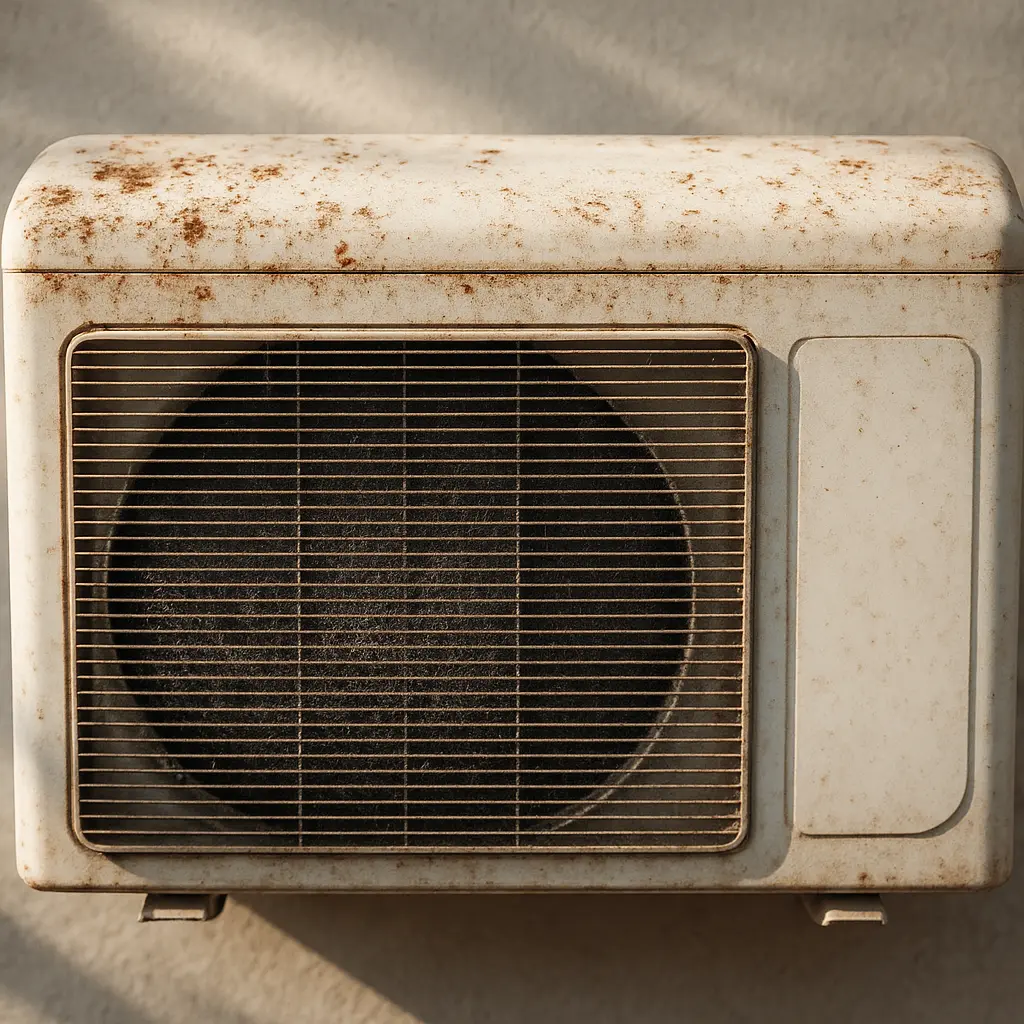
When your air conditioning system starts showing problems, the immediate question is always the same: repair or replace? In practice, homeowners waste thousands of euros on repeated repairs for units that should have been replaced years ago. The data consistently shows that AC units older than 10 years cost more to maintain than they save, yet people keep throwing money at failing systems. Recognizing air conditioning replacement signs early prevents emergency breakdowns during Estonian summer heatwaves and saves significant money over time. This guide identifies the 12 critical indicators that your unit has crossed the line from repairable to replaceable.
Table of Contents
- Quick Takeaways
- Age Exceeds Manufacturer Expectations
- Frequent Repair Cycles
- Rising Energy Consumption
- Refrigerant Type Obsolescence
- Inadequate Cooling Performance
- Excessive Noise and Vibration
- Moisture and Leak Problems
- Cost-Benefit Analysis
- Uneven Temperature Distribution
- Compressor Failure Indicators
- System Size Mismatch
- Replacement vs Repair Decision Framework
- Frequently Asked Questions
- References
Quick Takeaways
| Key Insight | Explanation |
|---|---|
| 10-Year Rule | AC units older than 10 years typically cost more to maintain than replace, especially with modern energy-efficient alternatives |
| 50% Cost Threshold | When repair costs exceed 50% of replacement value, replacement becomes the economically rational choice |
| R-22 Refrigerant Phase-Out | Units using R-22 refrigerant face expensive recharges and should be replaced with R-410A or R-32 systems |
| Energy Efficiency Gap | New units achieve SEER ratings of 16-20 compared to 8-10 for older systems, cutting electricity costs by 40-50% |
| Compressor Failure Signal | Compressor replacement costs 60-70% of new unit price, making full replacement the better investment |
| Frequent Repair Pattern | Three or more repair calls in two years indicates systemic failure beyond economical repair |
| Capacity Mismatch Impact | Undersized or oversized units waste 30-40% more energy and fail prematurely regardless of repair efforts |
Age Exceeds Manufacturer Expectations
The average air conditioner lifespan ranges between 10 to 15 years with proper maintenance. Once your unit crosses the 10-year mark, component failure rates increase exponentially. In practice, units manufactured before 2010 operate with outdated technology that cannot compete with modern efficiency standards.
Age alone does not mandate replacement, but it becomes the primary factor when combined with other warning signs. A 12-year-old unit requiring a major repair should almost always be replaced. The compressor, condenser coil, and evaporator coil all deteriorate simultaneously in older systems, creating a cascade of failures that repair cannot economically address.
Pro tip: Check the manufacturing date on the outdoor unit nameplate, not the installation date. Many units sit in warehouses for years before installation, aging before they ever operate.
Modern units from brands like Rotenso offer 20-year service lives with current technology, inverter compressors, and superior build quality. The efficiency gains alone justify replacement for units approaching 12-15 years, particularly in climates requiring year-round operation. When evaluating when to replace AC unit based on age, factor in total ownership cost rather than just the purchase price.
Frequent Repair Cycles
A reliable indicator that crosses the line from repair to replacement is the frequency of service calls. If you have called a technician three or more times in the past two years, your system has entered terminal decline. Each repair addresses a symptom rather than the underlying systemic wear.
The pattern typically follows this sequence: capacitor failure, then refrigerant leak, then fan motor issues, then compressor problems. These are not isolated incidents but connected deterioration across the entire system. Repairing each component as it fails costs 2-3 times more over two years than a single replacement.
Common Repair Cycle Patterns
Capacitor replacements every 18-24 months signal electrical system degradation. Refrigerant recharges more than once in three years indicate leak problems that spread throughout the coil system. Thermostat and control board replacements reflect wiring and connection corrosion that permeates the entire unit.
The financial mathematics are straightforward: if you have spent more than 700-900 euros on repairs in the past two years, you should have purchased a new unit instead. Those repair costs represent 40-50% of a quality replacement system, with nothing to show for the investment except continued breakdowns.
Pro tip: Keep a repair log with dates, problems, and costs. When the two-year total exceeds 50% of replacement cost, stop repairing immediately and schedule replacement.
Rising Energy Consumption
Energy bills provide quantifiable evidence of AC performance decline. A 20-30% increase in summer electricity costs compared to previous years indicates significant efficiency loss. Aging compressors work harder to achieve the same cooling output, consuming substantially more power.
Modern inverter-driven air conditioning units adjust compressor speed to match cooling demand precisely, reducing energy consumption by 30-40% compared to fixed-speed units from 2010 or earlier. The SEER (Seasonal Energy Efficiency Ratio) rating comparison tells the story clearly: units from 2008-2010 typically achieve SEER 8-10, while current models reach SEER 16-20.
Calculate your potential savings using actual numbers. A 3.5 kW unit running 6 hours daily during a 90-day cooling season consumes approximately 1,890 kWh at SEER 10 versus 945 kWh at SEER 20. At 0.15 euros per kWh, that represents 142 euros in annual savings, recovering replacement cost within 8-10 years while providing superior comfort.
This calculation becomes more compelling for larger commercial spaces or homes requiring multiple units. Three aging 3.5 kW units replaced with modern alternatives save 425 euros annually in electricity alone, before considering repair cost avoidance.
Refrigerant Type Obsolescence
Units manufactured before 2010 typically use R-22 refrigerant, which has been phased out under the Montreal Protocol due to ozone depletion concerns. R-22 availability has plummeted while prices have skyrocketed, making recharges prohibitively expensive. A refrigerant recharge that cost 150 euros in 2015 now costs 400-600 euros or more.
If your system requires R-22 and has developed a refrigerant leak, replacement is the only rational choice. Recharging R-22 systems throws money at a temporary fix for an obsolete technology with no long-term availability. Modern R-410A and R-32 refrigerants perform better, cost less, and face no regulatory restrictions.
According to environmental protection regulations, R-22 production ceased in 2020, leaving only reclaimed refrigerant available at premium prices with no guarantee of future supply.
The refrigerant question alone often tips the AC repair or replace decision decisively toward replacement. Even if the unit functions adequately today, the next leak creates an emergency replacement situation rather than a planned upgrade with time to research options and negotiate pricing.
Inadequate Cooling Performance
When your air conditioning system runs continuously but fails to maintain set temperatures, the problem extends beyond simple maintenance. Compressor wear reduces cooling capacity by 15-25% over a 10-year lifespan, meaning a unit rated for 3.5 kW might deliver only 2.6-3.0 kW after a decade of operation.
This degradation happens gradually, making it difficult to notice until the unit completely fails to cool during peak heat. If your system runs constantly during moderate weather or cannot reduce indoor temperature below 24-25°C on hot days, component wear has exceeded repairable thresholds.
Capacity Loss Mechanisms
Condenser and evaporator coils accumulate internal deposits that restrict heat exchange even with external cleaning. Compressor valve wear reduces refrigerant compression efficiency. Fan motor deterioration reduces airflow across coils. Each problem compounds the others, creating performance loss that no single repair can restore.
Testing cooling capacity requires specialized equipment, but you can assess performance empirically. If your unit ran 4-5 hours daily to maintain comfort three years ago but now runs 8-10 hours for worse results, capacity loss has reached critical levels. Replacement restores proper cooling while reducing operating hours and energy consumption.
Excessive Noise and Vibration
Air conditioning units operate quietly when functioning properly. Grinding, squealing, or rattling noises indicate bearing failure, motor problems, or compressor damage. These sounds signal imminent failure rather than minor maintenance issues.
Compressor noise particularly matters. A struggling compressor produces clicking, buzzing, or grinding sounds as internal components wear and clearances increase. Compressor replacement costs 1,200-1,800 euros for residential units, representing 60-70% of complete system replacement cost.
Excessive vibration indicates mounting failure, fan imbalance, or compressor mounting deterioration. Vibration accelerates wear throughout the system, loosening electrical connections, stressing refrigerant lines, and damaging control components. Units exhibiting strong vibration rarely survive another cooling season without major failure.
Compare noise levels consciously. If neighbors can hear your outdoor unit from 10 meters away, or if indoor operation creates noticeable disturbance, the unit has entered failure mode. Modern inverter units operate at 19-25 decibels indoors, essentially silent during normal operation.
Moisture and Leak Problems
Condensate drainage problems appear minor but often indicate serious issues. Properly functioning units generate condensation that drains cleanly through designated channels. Water pooling around indoor units, moisture stains on walls, or musty odors signal drain pan corrosion, coil leaks, or drain line failures.
Refrigerant leaks present differently than water leaks but prove equally problematic. Ice formation on refrigerant lines, reduced cooling performance, and hissing sounds near connections all indicate refrigerant loss. Small leaks in 10-15 year old systems typically spread as corrosion and vibration stress deteriorate multiple connection points simultaneously.
Attempting to repair refrigerant leaks in aging systems rarely succeeds long-term. The initial leak repair might hold, but adjacent connections fail within months as the underlying corrosion continues. This creates a repair cycle where you pay for multiple leak repairs plus repeated refrigerant recharges, quickly exceeding replacement cost.
Water damage from condensate leaks can destroy ceilings, walls, and flooring, adding thousands in repair costs beyond the AC system itself. When moisture problems appear in units older than 8-10 years, replacement prevents both system failure and potential structural damage.
Cost-Benefit Analysis
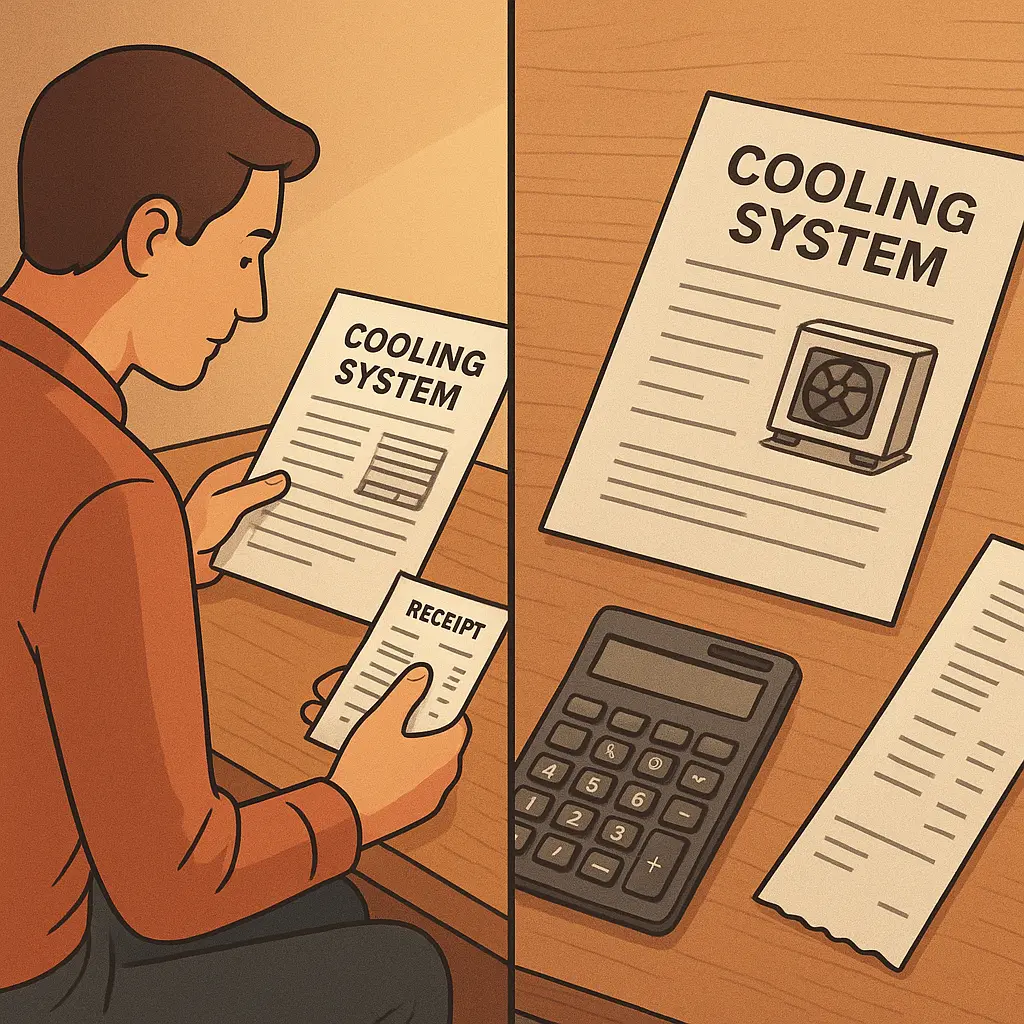
The AC repair or replace decision ultimately depends on financial analysis rather than emotional attachment to existing equipment. The 50% rule provides clear guidance: when repair costs exceed 50% of replacement value, replacement delivers better value.
Calculate total cost of ownership over 5 years. An aging unit requiring 300-500 euros annually in repairs plus consuming 150 euros extra in electricity costs 2,250-3,250 euros over 5 years. A new 3.5 kW split system costs 1,800-2,500 euros installed, requires minimal maintenance, and saves on energy, resulting in lower total cost with superior performance and reliability.
| Scenario | 5-Year Cost | Performance |
|---|---|---|
| Keep 10-year-old unit with repairs | 2,250-3,250 euros (repairs + extra energy) | Declining, unreliable |
| Replace with modern inverter unit | 1,800-2,500 euros (purchase + minimal maintenance) | Optimal, warranty protected |
| Emergency replacement after failure | 2,800-3,500 euros (premium pricing + rushed installation) | Optimal after replacement, discomfort during failure |
This analysis excludes the comfort and convenience factors. Planned replacement lets you research options, compare pricing, schedule installation during mild weather, and potentially negotiate better terms. Emergency replacement forces acceptance of whatever is available immediately at whatever price the installer demands.
For commercial applications, add business interruption costs. A failed AC system in retail space during summer heat drives customers away, creating revenue loss far exceeding equipment cost. Proactive replacement based on air conditioning replacement signs prevents this scenario entirely.
Uneven Temperature Distribution
Hot and cold spots throughout your space indicate airflow problems or capacity issues that repair cannot fix. Ductwork degradation, blower motor wear, or control system failure create uneven cooling that reduces comfort and wastes energy.
In split systems, uneven cooling often results from undersized units struggling to cover the intended space or from refrigerant charge problems caused by leaks. Room-to-room temperature variations of 3-4°C indicate serious distribution problems requiring system-level solutions.
Airflow Distribution Issues
Blower motor deterioration reduces air volume by 20-30% even when the motor continues operating. This creates inadequate air circulation, allowing hot spots in far corners while overcooling areas near supply vents. Motor replacement in older units costs 400-600 euros but does not address the underlying system imbalance.
Modern multi-split systems with individual zone control eliminate distribution problems entirely, providing precise temperature management for each space independently. This technology was unavailable or prohibitively expensive in older systems, making it an upgrade rather than a repair.
When temperature inconsistency becomes noticeable, evaluate whether repair restores uniform cooling or merely extends the life of an inadequate system. Replacement with properly sized, zoned equipment solves the problem permanently while improving efficiency.
Compressor Failure Indicators
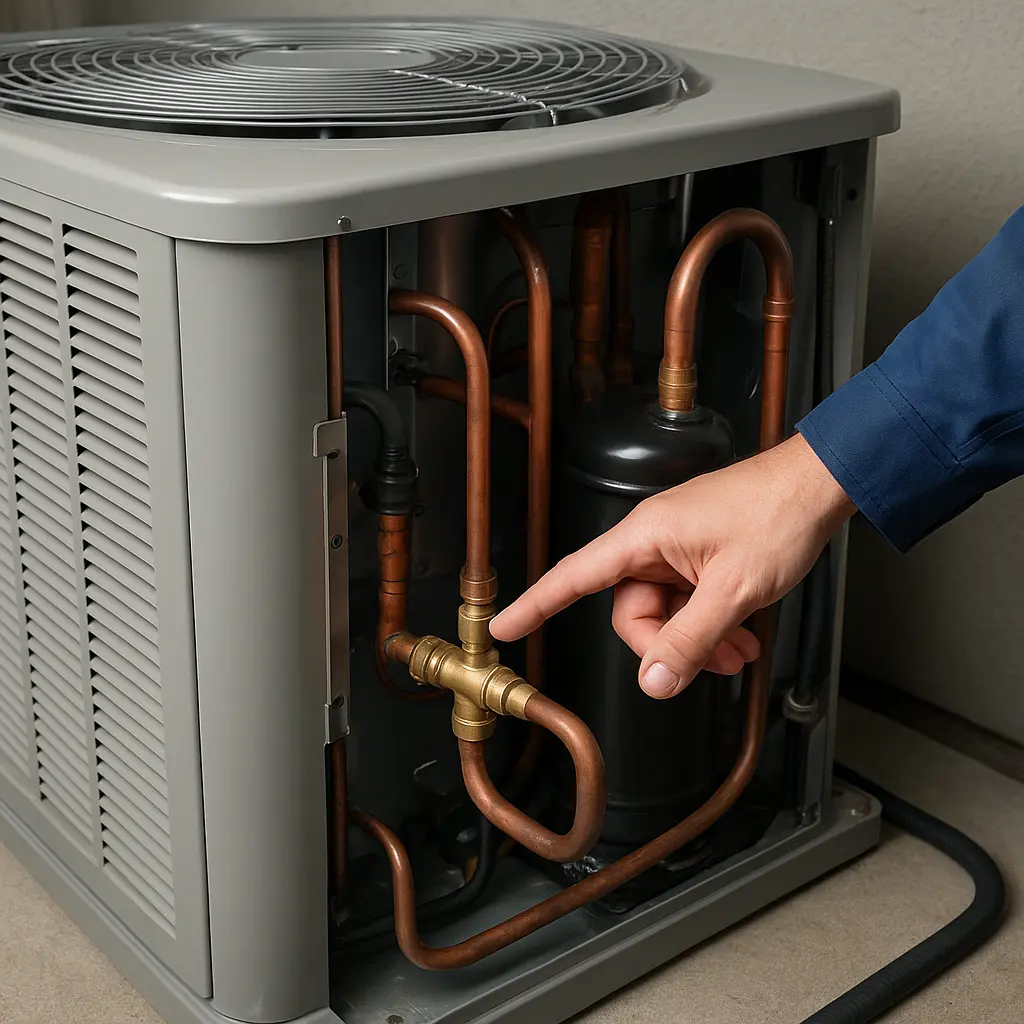
The compressor represents the heart of any air conditioning system, and its failure almost always mandates replacement rather than repair. Compressor replacement costs 1,200-1,800 euros for residential units, consuming 60-70% of total replacement cost while providing no efficiency improvements or modern features.
Hard starting indicates compressor struggle. If your unit takes multiple attempts to start, makes clicking or buzzing sounds during startup, or trips circuit breakers, the compressor has entered failure mode. Capacitor replacement might provide temporary relief, but compressor damage continues progressing.
Circuit breaker trips specifically during AC operation signal electrical problems often caused by compressor motor failure. The motor draws excessive current trying to compress refrigerant against internal wear and damage. This pattern rarely reverses, only accelerates toward complete failure.
Warm air discharge despite compressor operation means the compressor pumps refrigerant without creating pressure differential needed for cooling. Internal valve failure or piston wear causes this condition, neither of which is repairable. The unit consumes full electrical power while delivering zero cooling, the worst possible scenario.
System Size Mismatch
An undersized or oversized air conditioning unit never performs efficiently regardless of condition or maintenance. If your system short-cycles (runs for 5-10 minutes then shuts off repeatedly) or runs continuously without satisfying the thermostat, sizing problems exceed repairable issues.
Oversized units cool quickly but fail to dehumidify properly, creating clammy, uncomfortable conditions. They cycle on and off frequently, wearing components prematurely and wasting energy during startup surges. A 5 kW unit in a space requiring 3 kW capacity will fail faster and cost more to operate than a properly sized system.
Undersized units run continuously, never achieving set temperatures during peak conditions. This maximizes energy consumption while minimizing comfort, delivering the worst of both outcomes. A 2.5 kW unit struggling to cool a space requiring 3.5 kW operates at maximum capacity constantly, wearing components at accelerated rates.
Proper Sizing Principles
Residential cooling requires approximately 100-120 watts per square meter for standard insulation in moderate climates. A 30 square meter space needs 3.0-3.6 kW capacity, while a 50 square meter area requires 5.0-6.0 kW. These calculations must account for ceiling height, insulation quality, window area, and sun exposure.
When replacing a mismatched system, invest in professional load calculation rather than matching existing capacity. The original installer might have sized incorrectly, perpetuating the problem. Proper sizing eliminates 30-40% of operational inefficiency while extending equipment life substantially.
Pro tip: Retailers like KliimaPood24.ee offer consultation services to ensure proper sizing before purchase, preventing the expensive mistake of replacing one inadequate system with another.
Replacement vs Repair Decision Framework
Making the AC repair or replace decision requires systematic evaluation rather than emotional reaction to breakdown. Apply this framework to reach the correct conclusion based on your specific situation.
First, calculate the Age x Repair Cost factor. Multiply the unit age by estimated repair cost. If the result exceeds 5,000, replacement makes financial sense. For example, a 12-year-old unit requiring 500 euro repair yields 6,000, clearly in replacement territory. An 8-year-old unit needing 400 euro repair yields 3,200, suggesting repair remains viable.
Second, count repair incidents over the past three years. Zero to one repair suggests continued reliability. Two repairs indicate declining performance but possible continued service. Three or more repairs signal terminal decline requiring replacement.
Third, assess refrigerant type and availability. R-22 systems automatically move to the replacement category regardless of other factors due to refrigerant obsolescence and cost. R-410A systems manufactured after 2010 remain repairable if other factors support repair.
Fourth, calculate 5-year total cost of ownership for both options. Include repair costs, estimated future repairs, energy consumption difference, and replacement timing. The scenario with lower total cost and better reliability wins.
| Factor | Repair Indicator | Replace Indicator |
|---|---|---|
| Age x Repair Cost | Below 5,000 | Above 5,000 |
| Repair Frequency (3 years) | 0-1 incidents | 3+ incidents |
| Refrigerant Type | R-410A or R-32 | R-22 |
| Energy Cost Trend | Stable | Increasing 20%+ |
| Compressor Status | Functional | Failing or failed |
| Comfort Performance | Maintains set temperature | Cannot reach set temperature |
Apply this framework honestly rather than seeking justification for a predetermined conclusion. The numbers reveal the correct path forward, removing emotion from a financial decision.
When factors split evenly between repair and replacement, timing often breaks the tie. If breakdown occurs during peak cooling season, temporary repair might make sense to avoid emergency replacement premium, followed by planned replacement during off-season. If breakdown occurs in spring or fall, immediate replacement captures off-season pricing and installer availability.
Frequently Asked Questions
What is the average lifespan of an air conditioning unit?
The average air conditioner lifespan ranges from 10 to 15 years with proper maintenance. Units in coastal areas or those operating year-round tend toward the lower end, while well-maintained systems in moderate climates can reach 15-17 years. Modern inverter units from quality manufacturers potentially extend this to 18-20 years, though efficiency typically declines after year 12 regardless of mechanical function.
How much should I spend on repairs before replacing my AC?
The 50% rule provides clear guidance: when a single repair costs 50% or more of replacement value, choose replacement instead. For accumulated repairs, if you have spent more than 40-50% of replacement cost over two years, stop repairing and replace. For a system costing 2,000 euros to replace, any repair exceeding 1,000 euros or two-year repair totals above 800-1,000 euros mandate replacement.
Can I replace just the outdoor unit and keep the indoor unit?
Technically possible but practically inadvisable. Indoor and outdoor units are engineered as matched systems with specific refrigerant charges, coil designs, and capacity ratings. Mismatched components operate inefficiently, void warranties, and fail prematurely. The cost difference between replacing only the outdoor unit versus the complete system is typically 30-40%, making complete replacement the better investment that delivers warranty protection and optimal performance.
What are the most reliable air conditioning brands for replacement?
Reliability depends more on proper installation and maintenance than brand name alone. That said, manufacturers like Rotenso, Mitsubishi, Daikin, and LG consistently deliver quality inverter-driven systems with strong warranty support. Focus on inverter technology, SEER ratings above 16, and availability of local service support. KliimaPood24.ee specializes in Rotenso systems that balance quality with affordability, backed by expert consultation and installation services.
How do I know if my AC unit is the right size for my space?
Proper sizing requires professional load calculation accounting for square meters, ceiling height, insulation, window area, and sun exposure. Rule-of-thumb suggests 100-120 watts per square meter for standard construction. Observable symptoms of incorrect sizing include short-cycling (runs briefly then stops), continuous operation without reaching set temperature, or excessive humidity despite cool air. If you experience these issues, your unit is likely mismatched to your space regardless of mechanical condition.
Does replacing an old AC unit really save money on energy costs?
Yes, substantially. A 10-year-old unit with SEER 10 rating consumes twice the electricity of a modern SEER 20 unit for identical cooling output. For a 3.5 kW system operating 6 hours daily over a 90-day season, this represents approximately 140-150 euro annual savings at typical electricity rates. The efficiency gap widens further when comparing inverter-driven modern units to fixed-speed older systems, with savings potentially reaching 40-50% of cooling costs. These savings compound annually over the new unit’s 15-year lifespan.
What should I do if my AC breaks down in the middle of summer?
If the unit is more than 10 years old or if repair costs exceed 50% of replacement value, resist temporary fixes and proceed directly to replacement despite timing pressure. Request expedited installation from your supplier, with most professional retailers completing installation within 3-5 business days. For newer units with reasonable repair costs, complete the repair to restore immediate comfort, then schedule replacement during off-season when pricing and installer availability improve. Portable cooling units provide temporary relief for 50-150 euros if installation delays extend beyond comfort tolerance.
What has been your experience with air conditioning replacement decisions, and which factors ultimately convinced you to replace rather than repair?
References
- U.S. Department of Energy efficiency standards and HVAC guidelines
- American Society of Heating, Refrigerating and Air-Conditioning Engineers technical resources
- Environmental Protection Agency refrigerant regulations and phase-out information
- Consumer Reports air conditioning testing and reliability data